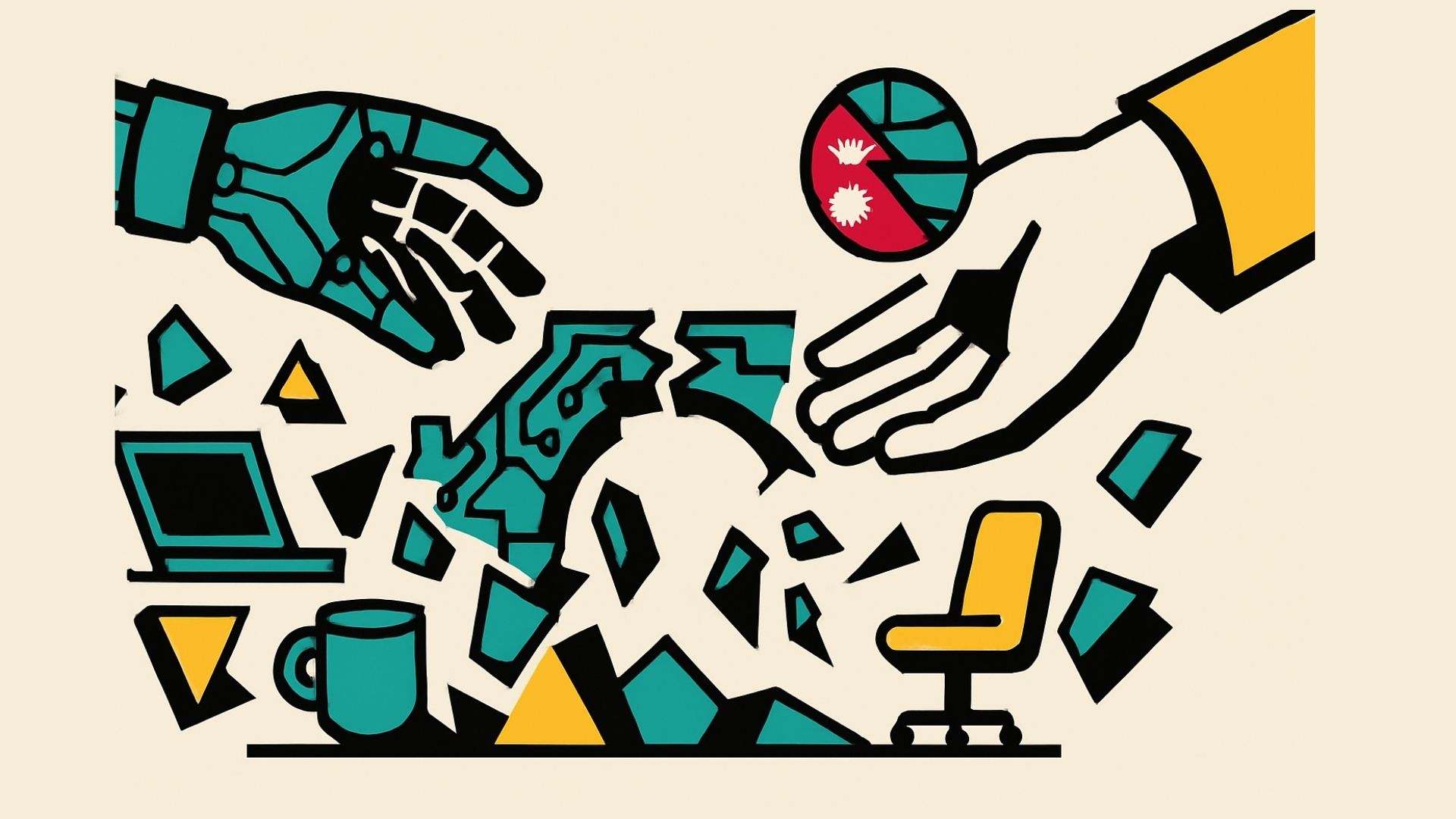
I read Andrew Yang's latest article, "The End of the Office," yesterday. He called what's happening to white-collar jobs "the Fuckening." I'm a 22-year-old developer in Nepal. My entire career plan is sitting at a desk and looking at a computer. So yeah, I paid attention.
Yang's not some random guy on Twitter dooming. He ran for president on this exact issue. He's been saying "AI is coming for your jobs" since before most of us took it seriously. And now his tone has shifted from warning to mourning.
Millions of office jobs will evaporate in the next 12 - 24 months. This will be an epic disaster for millions of workers and families. https://t.co/6829id4rME
— Andrew Yang🧢⬆️🇺🇸 (@AndrewYang) February 16, 2026
I sat with this one for a while. Not because it's new information. But because it forced me to think about what I'm actually building toward.
What Yang Actually Said
The article is blunt. There are about 70 million white-collar workers in the United States. Yang expects that number to drop by 20-50% over the next several years. Not decades. Years.
He talked to the CEO of a publicly traded tech company who laid it out: "We're firing 15% of workers right now. We'll probably do another 20% two years from now. And then another 20% two years later. After that, who knows?"
College grads? Only 30% are finding jobs in their field. Underemployment is at 52%. The social contract of "study hard, go to school, get a good job" is, in Yang's words, about to be "vaporized to smithereens."
He also made a point that stuck with me: someone in his family had AI program a website this week. It completed in minutes what used to take a designer or a firm days of work.
I build websites for a living. That part made me uncomfortable.
The Discussion Was Even Scarier
The comments on Twitter and Reddit unsettled me more than the article. People weren't just dooming - they were being specific.
One senior software developer wrote: "I noticed we just stopped hiring new people a few years ago. Not because management made any decision about it, we just didn't NEED anyone. I'm not too worried about losing my job in the next 2 years, but I do worry that if I become unemployed, I may never find another job again."
Think about that. A senior dev who isn't worried about being fired - they're worried about being unhirable if they ever need to look again.
Another commenter nailed something I'd been thinking: "I don't fear the legacy companies laying off tons of people. What I fear are new companies entering the market doing the same as current companies with a tenth of the employees."
Most people focus on the layoffs at big companies. But the real disruption is small teams doing what big teams used to do. A 5-person startup with AI tools going up against a 500-person company. That's a different kind of threat.
Then there was the purchasing power question that nobody seems to have a good answer for. If millions lose their jobs, who's buying the products these AI-powered companies are making? Who's paying for iPhones and Netflix subscriptions? One commenter put it perfectly: "Will unemployed people surviving on growing their own vegetables be buying $1,500 smartphones?"
Nobody had a convincing answer. The best response was basically: "Yeah, that's a problem for the next CEO."
Here's Where Nepal Makes This Weird
Most of this conversation is happening through an American lens. "Mid-career managers making six figures" being laid off. "Mortgage delinquencies rising." "Silicon Valley home prices dropping."
I'm reading this from Ghorahi, Nepal. My reality is different.
I don't have a mortgage. I'm not making six figures. I'm a BCA student freelancing as a frontend developer for a remote company. My cost of living is a fraction of what Americans deal with. In theory, that should make me more resilient. Even if the market gets competitive, I can survive on less.
The problem is that the entire plan for developers like me in Nepal was: learn to code, get good, land a remote job with a company abroad, earn in dollars. That was the path. And AI might kill it before I get there.
Why would a US startup hire a remote developer from Nepal when Claude can write the code for them? The cost advantage I used to have? AI just undercut it to nearly zero.
It's a double-edged thing. Lower cost of living means I can weather the storm longer. But the opportunity that was supposed to lift me up - remote work for global companies - might not exist the same way in two years.
The people panicking the most had the most to lose. I didn't have much to lose. But I had a lot to gain from the old system - remote work, global opportunities, the internet as equalizer. That's the part that scares me.
What I'm Actually Doing
I don't have it figured out. But I'm not sitting still either.
The biggest shift is that I stopped just "learning to code." Knowing Python or React isn't a moat anymore. AI writes decent code. What it doesn't do well is understand what to build, for whom, and why. So I've been shipping actual products - hackathon projects, side projects, freelance work. Taste matters more than syntax now.
I use Claude. I use AI coding assistants daily. Some devs have this weird pride about not using AI. I think that's like refusing to use Stack Overflow in 2015. The tool isn't the threat. Being replaced by someone who uses the tool better than you - that's the threat.
This blog exists because if AI can do what I do technically, the differentiator becomes who I am. My perspective, my story, my network. A developer from Nepal who ships products and writes about it. AI can't be that.
I've also been focusing on end-to-end ownership. Not just "I know React" or "I know Django" but taking an idea from zero to deployed product with user feedback loops. That full cycle is harder to automate than any single skill. And hackathons have been the best training ground for this - three wins so far, each one teaching me more about product thinking than any tutorial ever did.
The Psychology of It
Yang wrote about the social contract being vaporized. "Study hard, go to school, get a good job, live a decent life." He's talking about American workers who followed that contract and now feel betrayed.
But what about people like me who are still IN school? Who are halfway through the contract? I'm in my 6th semester. I'm doing everything "right." Learning relevant technologies. Building projects. Getting work experience. And the ground is shifting under my feet while I'm still on it.
There's a weird psychology here that I don't see people discussing. Yang's audience is mostly people who had stability and might lose it. I never had that stability. Growing up in Nepal, the idea of a guaranteed career path was always a bit of a fantasy anyway. There was never a corporate ladder waiting for me.
There's a strange freedom in that, actually.
I don't have to grieve the loss of a career path I never had. I can just... adapt. Build. Figure it out as I go. Which is basically what I've been doing anyway.
But let me be real. There's also fear. Real fear. Because the one thing that was supposed to be the great equalizer - the internet and remote work letting talented people anywhere compete globally - might be getting disrupted right when I need it most.
I don't have a clean conclusion. Nobody does right now. Yang says "batten down the hatches." The Reddit comments range from "we're all screwed" to "this is overblown" to "learn plumbing."
I'd rather be the person building with AI than the person being replaced by it. I'd rather ship 10 imperfect products than have a perfect resume that nobody's hiring for. Maybe that's naive. But right now, sitting at my desk in Nepal, I can either panic or build.
I'm choosing to build.